Matt R. · Jul 19, 20265.0 / 5
Get Kirked, suitor #2
ATLANTA MOVIE CLUB
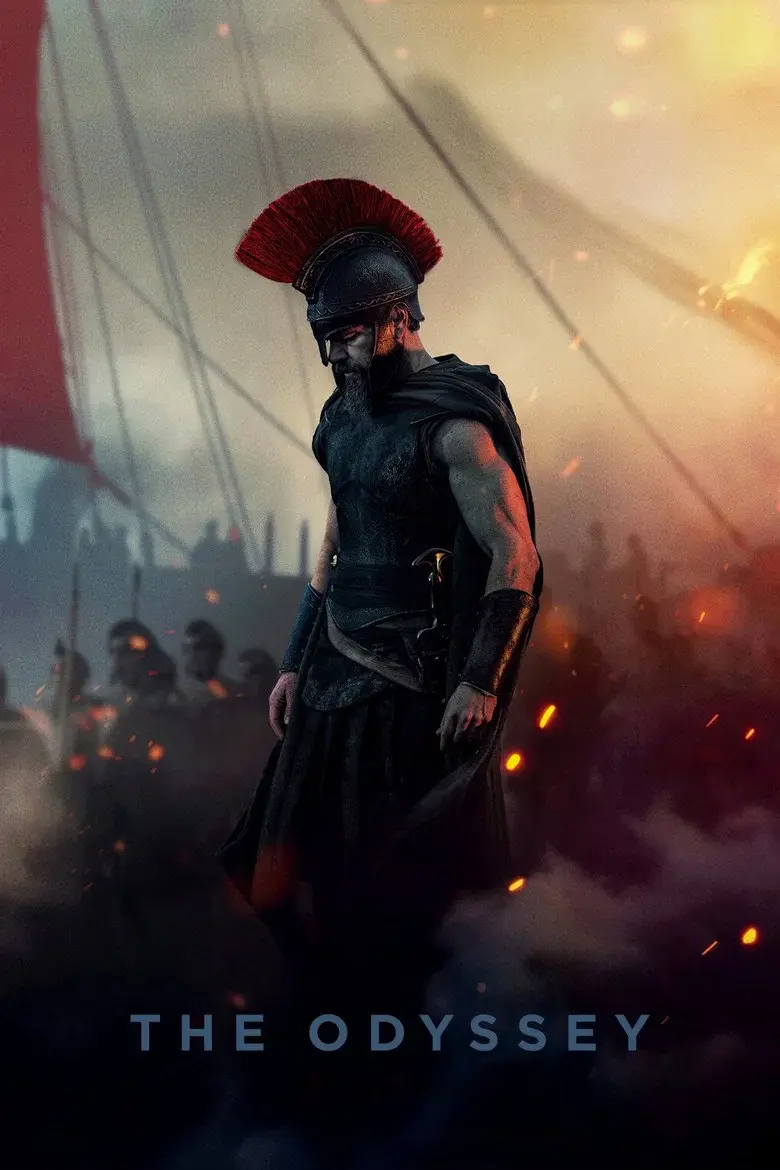
Odysseus, the legendary King of Ithaca, embarks on a long and perilous journey home following the Trojan War. Throughout his voyage, he is forced to confront the whims of gods, mythological monsters, and trials that stretch both his cunning and his humanity to the breaking point.
External scores supplied by MDBList and cached by Atlanta Movie Club. Select a score to open the movie on that service.
CLUB EVENTS
MEMBER REVIEWS
Get Kirked, suitor #2
Is it wrong that I kinda feel bad for the cyclops? Saw someone say that this felt like a spiritual sequel to Oppenheimer and after watching I agree. Nolan, and everyone involved, is firing on all cylinders here. Never once did this movie feel like it was 3 hours long
This review may contain spoilers.
This movie is fantastic. Christopher Nolan has reached a point where every new movie feels like another argument for him as the best director working. I put him ahead of Spielberg right now, whose strongest run is probably behind him, and James Cameron, who spent most of the last two decades living inside the Avatar franchise. I'm not gonna settle the all time question off one movie, but this definitely strengthens Nolan's case. It's gorgeous, emotionally powerful, and beautifully made. Matt Damon is fantastic in this from beginning to end. He embodies Odysseus, and personally, going forward, when I picture Odysseus, I'm probably gonna picture Matt Damon. He makes his character feel like the smartest and toughest man in every room, but also a flawed man, a man exhausted by his own decisions. He's smart enough to outthink his enemies, proud enough to challenge men, monsters, and gods, but guilty enough to keep sabotaging the journey home he claims that he wants. This isn't just a man trying to survive. This is a man carrying the weight of what he did in Troy, everything that happened because of his own choices, and his own hypocrisies. Anne Hathaway plays Penelope, Odysseus's wife, and she does a fantastic job. She carries most of the emotional weight back in Ithaca after twenty years of waiting for her husband to come home. Tom Holland plays his son Telemachus, and he's very good here as well. He comes across as passionate, fundamentally decent, and clearly his father's son, but without his father's strength or authority. He knows what should be done, but nobody ever taught him how to command a room or take control of his life and his kingdom. His father was gone for his entire development into adulthood, so he never got the training or guidance that might have prepared him to stand in Odysseus's place and become the next king. That becomes a serious problem here, because Ithaca is falling apart while everyone waits for Odysseus to return home or be declared dead and replaced. The setting is that Penelope's suitors have basically occupied the palace. They eat Odysseus's family's food, they drain the kingdom's resources, they mistreat the household, they abuse the animals, they abuse the staff and the slaves, and they act like at any time one of them is going to inherit everything. The whole situation is a rolling embarrassment for the family. Robert Pattinson plays Antinous, the most aggressive of the suitors, and he makes clear this situation can't go much longer after twenty years. Telemachus sees exactly what's happening. He knows he needs to do something to stop it, but he can't think of a way to stop it. He can't fight these men, the laws of Zeus in terms of hospitality won't allow him to kill them, and he doesn't have a real easy way to throw them out. The whole kingdom seems to turn on whether his father returns or his mother decides to marry. The longing for Odysseus's return from his son and his wife is necessary for this movie to work. You have to feel Penelope's pain and frustration. You have to feel Telemachus's impatience and his need for the presence of a father he barely knows. You also have to understand that Odysseus isn't just being kept from home by outside forces. The film heavily suggests that some part of him may be delaying his return because he doesn't feel he deserves it yet. The story of The Odyssey picks up after the events of The Iliad, where the Greeks have sacked Troy. Odysseus was the mastermind behind the Trojan Horse plan that got them inside the city. They presented the horse as a gift, counted on the Trojans accepting it and taking it into their gates, hid the Greek soldiers inside of it, and then weaponized that gift and act of trust to destroy the people who received it. Nolan treats that as more than a brilliant military trick. In the moral framework of this movie, it's a violation of the sacred rules of hospitality that were supposed to separate civilized men, such as the Greeks, from savages. The Greeks enter Troy through deceit and then ransack it. They kill, rape, pillage, and destroy. Odysseus wins the war, but Nolan makes you question what exactly he's won and what that victory did to him. The journey home becomes punitive, and this is probably my favorite interpretation in the movie. Odysseus says he wants to go home, but his choices keep suggesting that he can't allow himself to get there until he's suffered for what he did in Troy. He keeps wandering and putting himself and his men in danger because some part of him doesn't believe he deserves to walk through his own door without being punished first. His wife needs him, his son needs him, his kingdom needs him, but he can't fully commit to coming home until he feels like he's paid for what he did in Troy. This reminded me of the biblical story of the Israelites wandering for forty years after leaving Egypt. The journey to the Promised Land should have been much shorter, but distrust, disobedience, and judgment stretched it across an entire generation. Here, Odysseus's trip home shouldn't take ten years after he's already spent ten years at war, but he's not ready to go home. The difference here is that the judgment doesn't seem to come only from the gods. A lot of it looks like it's coming from Odysseus himself. Nolan makes an interesting choice with the supernatural material here. He doesn't strip the mythology out of the story, but he also doesn't stop to explain every intervention. There are gods, monsters, visions, and events that look magical, but we're never really told whether the things they're suffering are divine punishment or Odysseus's conscience exerting itself. The gods may be keeping him from getting home. His guilt may be making him sabotage himself and his men. Both things could be true at once. I like that Nolan leaves it up to us instead of explaining it definitively one way or the other. Watching this made me feel like I wish we'd gotten Nolan's version of The Iliad first. The Trojan War, its execution and its outcomes, carries enormous moral and emotional weight throughout this movie, but Nolan can only give us fragments of it while also telling the story of Odysseus's voyage home. We hear the famous names and see enough of Troy to understand the horror of what happened, but Odysseus is the only participant in the war that we really get to know. I understood what Troy did to him, but I sometimes wish the other people involved were more than brief appearances. Lupita Nyong'o plays Helen, and Nolan doesn't present her primarily as the great beauty whose face launched a thousand ships. She shows up here as someone altered by the war, by her abduction, and by the men around her. She's somewhat tragic rather than glamorous. Jon Bernthal plays her husband Menelaus, and the two of them present a damaged and seemingly complicated relationship I wish the movie had more time to explore. There are a lot of other strong performances here, but I have to shout out John Leguizamo as Eumaeus and whoever trained the dog playing Argos. I'm not gonna spoil the moment, but the one scene that had me tearing up from sadness rather than passion involved that dog. Anybody who has ever loved a dog will understand immediately. Argos had been waiting a very long time. Most of the other times I felt myself tearing up came from passion. The final act turns the homecoming into a revenge saga, and it feels like the template for every revenge story that came after. A man's home has been violated, his family has been threatened, and his kingdom has been eaten alive by people who believe he's never coming back. He survives a brutal journey to get back there and put things right. When Odysseus finally acts, Nolan doesn't soften the blow. The movie spent hours making you want these men out of his home, and the payoff is as definitive as it needs to be. The final stretch is phenomenal because the action has earned emotional weight behind it. We understand what Odysseus has endured, what his wife has endured, what Telemachus has endured, and what the suitors have done in his absence to his family and his kingdom. Nolan by this point has given you the hunger for justice that makes the brutal action feel justified and cathartic. If I had one bone to pick, the movie runs nearly three hours, and while the first hour is phenomenal and the final hour is phenomenal, the middle hour drags just a bit in comparison. The second hour never lost me, but that's the stretch where I became most aware of the runtime. That's about the only real criticism of this I have. Visually, this movie is gorgeous. I saw it in digital IMAX rather than a full 70mm presentation, and it still looks incredible. Everything here looks beautiful. The landscapes, the ships, the monsters, the battle sequences, and the family moments back in Ithaca all have the beauty and size and weight that this story requires. I'm seeing it again this weekend in Dolby Cinema, and I'm looking forward to experiencing it with a group of friends. I expect this to be a major awards contender. It should be in line for Best Picture, Nolan should be in line for Best Director, and Matt Damon should be in the conversation for Best Actor. Anne Hathaway also gives a controlled and emotionally difficult performance here that deserves serious consideration and respect, perhaps as Best Supporting Actress. Anyone into Christopher Nolan, Greek mythology, action movies, or a great revenge saga is gonna have a great time here. This is outstanding filmmaking, and I can't imagine another major adaptation displacing it anytime soon. This is going down as the definitive version of The Odyssey going forward.
I’m glad it defied the initial negative social media campaign. this was an amazing film. a true blockbuster. the scale was massive and the immersive atmosphere washed over you like the ocean over Odysseus as he made his way back to Ithaca. it was long, but the runtime didn’t drag on.…