This review may contain spoilers.
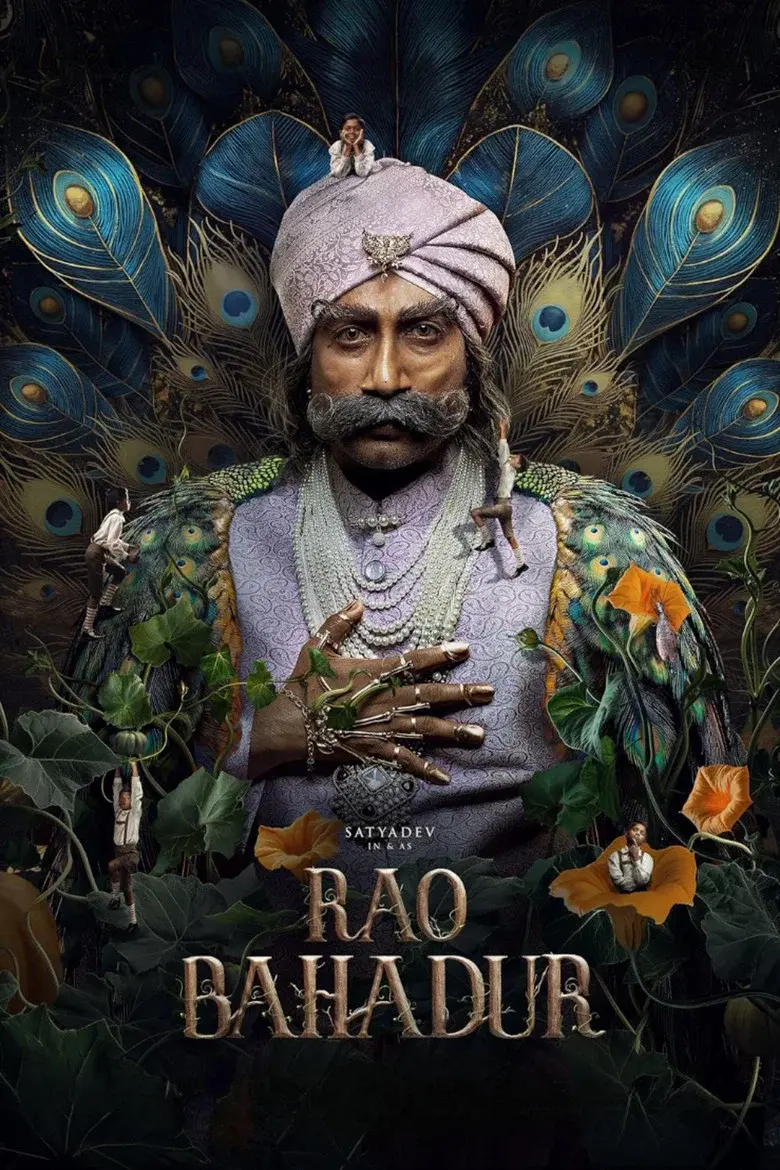
Rao Bahadur was excellent. This is another Telugu film that came out here recently, and it’s one of the better movies I’ve seen this year in any format, in any language. It’s told from the point of view of an old man who’s dying, and has been dying for a while, but who’s also been essentially insane since the death of his youngest son. The movie slowly unpacks how he got there through flashbacks and magical realism, and underneath all of it is a story about race and class and caste and culture wrapped up in one family tragedy. The old man had two sons. The older one was lighter-skinned, taller, and looked like him. Then the younger boy was born much darker than either parent. Honestly, I thought the baby on screen was just a Black baby. From that moment the father convinced himself the child couldn’t be his. Between the skin color and his obsession with family legacy, he decided his wife must have cheated, and he never came back from it. He refused to acknowledge the boy as his son, treated his wife horribly, sided against the kid in every conflict, didn’t want him educated, and spent the child’s entire life treating him like he didn’t belong in his own family. The mother spent that same life standing up for her son. Eventually the younger son dies under circumstances I won’t spoil, and that’s what destroys the family. The father loses his mind, the mother shuts herself away from the world and won’t even interact with her surviving son. When we enter the story in the present, the family has already fallen apart, and the oldest son is talking about leaving because he can’t take it anymore. The movie then walks backward to show exactly how they got here. One thing I really liked is that the father wasn’t always this person. As a young man he was a world traveler who spent his life screwing around until his own dying father shamed him into coming home. He settles down, pursues the woman who becomes his wife, and for a while they’re genuinely happy. Then the younger son is born and everything rots. What makes it work is that this isn’t a simple jealousy story. It’s about how racism, bigotry, class, caste, tradition, and family legacy all combine to poison the way this man sees his own family. The magical realism reinforces that. His ancestors appear throughout the film and weigh in on his life, encouraging his obsession with legacy and bloodlines, then later forcing him to confront the consequences. They’re basically the embodiment of the traditions that made him, and those scenes fit naturally instead of feeling self-indulgent. Satyadev Kancharana carries this film. He plays the young version, the old version, the dying version, the insane version, and everything in between, and it’s all believable. Like a lot of Indian films it runs close to three hours, but I never felt it drag, because every flashback adds another piece to the puzzle of why this family destroyed itself. As a Black American, I could vibe with how race and culture and history were being handled here. India’s history isn’t America’s history, but I recognized a lot of the ideas. The lighter-skin preference, the assumptions people make based on appearance, the way prejudice gets tangled up in family expectations. There was a lot for me to connect with even though the setting is completely different. They didn’t miss a note. If you’re open to foreign-language films, go see it. If you’re into Indian films, and Telugu films specifically, this is a must. I saw Maa Inti Bangaaram not long before this and thought that was very good too. Telugu cinema is having a moment right now, and Rao Bahadur is one of the best examples of why.